




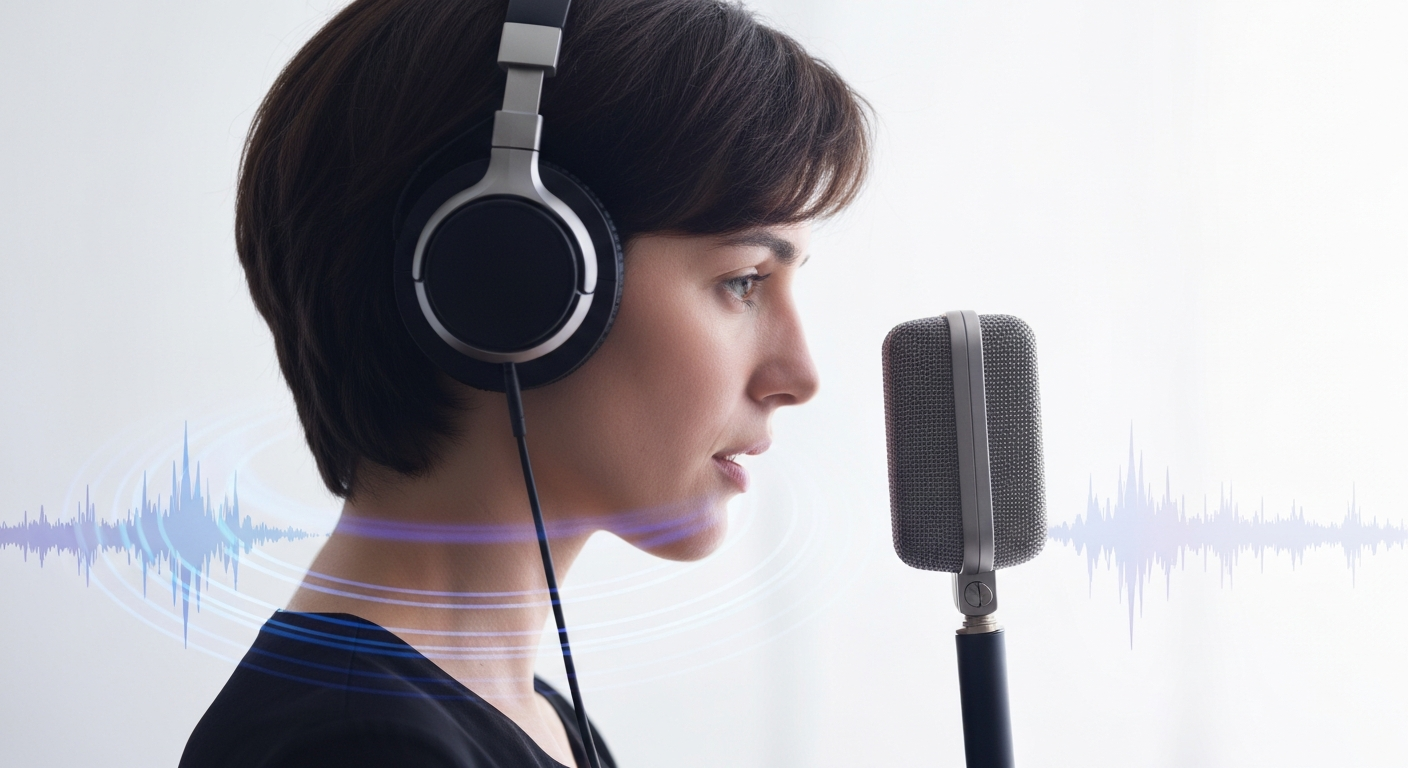
Many English learners feel uncomfortable, even embarrassed, when they hear recordings of themselves. The good news: this feeling is normal, temporary, and absolutely fixable with the right strategies.
Why Your Own Voice Sounds So Strange
When you speak, you usually hear your voice in two ways: through the air and through vibrations inside your head. A recording only captures the sound through the air, so it feels higher, thinner, or just “not you.” This happens in every language, not only English, which means you are not bad at speaking—your brain is simply surprised by a new sound source.
Understanding this helps you react with curiosity instead of shame. The goal is not to love your voice immediately, but to get used to it so it stops blocking your progress in English.
Step 1: Start with Very Short, Low-Pressure Recordings
Begin with tiny tasks. Set a timer for 30–60 seconds and record yourself answering an easy question, such as:
- What did I do today?
- What is my favorite food and why?
- What am I looking forward to this week?
After recording, wait one or two minutes, then listen once—only once. Your job is not to judge, but simply to notice: “This is what my English voice sounds like today.” Then stop. Repeating this short routine a few times a week gently trains your brain to accept your recorded voice as normal.
Turning recordings into neutral observations, not self-criticism, builds real speaking confidence.
Step 2: Separate Emotion from Evaluation
Many learners immediately think, “I sound terrible” or “My accent is awful.” Instead, try replacing emotional labels with neutral descriptions. While listening, write down three simple observations:
- One thing you like (for example, “My pace is calm” or “My voice sounds friendly”).
- One thing that is clear (for example, “People can understand most of my words”).
- One thing to improve (for example, “I want to stress important words more”).
💡 Pro Tip: Talk to yourself as you would to a friend learning English. If you would never say it to them, do not say it to yourself.
Step 3: Compare, Don’t Copy, Native Speakers
Shadowing—speaking along with a native speaker—is a powerful way to improve rhythm and pronunciation. Choose a short clip from a podcast, YouTube video, or audiobook. Listen once, then record yourself reading the same part. Compare your recording with the original, but focus on specific features:
- Where do they pause?
- Which words do they stress more strongly?
- Is their voice higher or lower at the end of sentences?
You are not trying to erase your accent. Instead, you are learning to make your English voice clearer and more expressive, while still sounding like you.
Step 4: Build a “Voice Progress” Folder
Create a folder on your phone or computer and save one or two recordings each week. Label them by date and topic, such as “2026-04-01 – Weekend plans.” Every month, listen to an old recording and a new one back-to-back. Notice:
- Are you pausing less?
- Are your sentences longer or more natural?
- Do you sound more relaxed?
This simple habit turns your recordings into proof of progress instead of evidence of “failure.” Over time, you will start to feel proud of how far your English voice has come.
Step 5: Practice Speaking in Safe, Supportive Spaces
The more you speak English in real situations, the more natural your voice will feel. Join conversation clubs, online language exchanges, or small group classes where mistakes are welcome. Tell your teacher or partner that you are working on feeling comfortable with your voice. Most people will be happy to encourage you and give gentle, specific feedback.
📌 Key Takeaway: Confidence does not appear first and then allow you to speak. You speak regularly, even when it feels strange, and confidence slowly follows.
Final Thoughts: Your English Voice Belongs to You
Getting used to your own voice in English is less about perfection and more about acceptance plus practice. Short recordings, neutral self-evaluation, smart comparison with native speakers, and safe speaking spaces all work together to make your voice feel familiar instead of frightening.
One day, you will press “play,” hear yourself speaking English, and think, “That sounds like me.” Not perfect, not native—just confidently, clearly, and proudly you. And that is exactly the voice the world needs to hear.